What are your thoughts on the concept of living a very long life?
Ah, it’s one of those age-old questions on existence! Isn’t it too soon in the year to be philosophical? It’s only been what, one week? I suppose now is as good a time as any to ask the right questions. In fact, this question could easily tread back to most of our New Year Resolutions. Let me explain.
So yesterday, I binged on a new Netflix series, You Are What You Eat: A Twin Experiment. On the face of it, this series had me hooked at the title and I was already hitting play within 3 seconds of the preview.
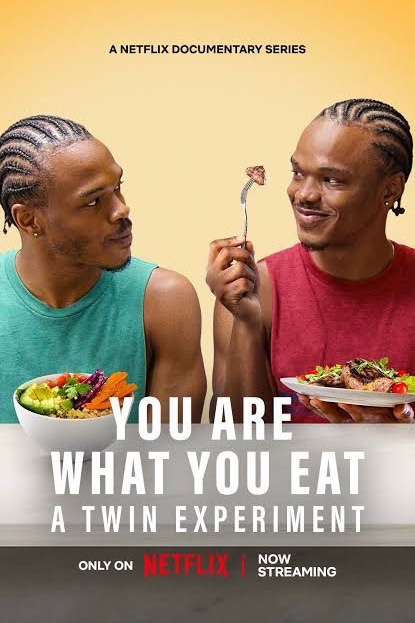
Twin experiments intrigue me because it allows us to explore, somewhat accurately, the question of “What if?”. I say somewhat because, although identical twins develop from a single fertilised egg and are thought to have the same genome, recent studies have shown that on average, their genomes are likely to differ by an average of about 5.2 mutations that would begin as they develop in the womb. These variations would later accumulate as they grow older resulting in simple differences for example in things like one being slightly taller or one being a bit leaner. These differences, however, are assumed to be minimal in comparison to say two siblings of different ages or fraternal twins.
Overall, twin studies explore possibilities. Of course in an ideal, experiment, clones would be the most accurate test subjects. This, however, would most certainly be replete with not just technological limitations but also have moral and ethical implications. Twin studies are therefore the closest way to represent such a test environment, easily and ethically.
Coming back to my point, when I began watching the series, I was fully expecting to hear the same old thing I’ve grown up hearing, that a well balanced diet should have a certain portion of carbohydrates, fruits, vegetables and proteins such as meat, fish, eggs and dairy. But as the series progressed, I was blown away by the conclusion it drew up.
Now, for those who haven’t seen the series and are planning on doing so, please stop reading right here because the next few paragraphs will contain spoilers.
The series has four episodes altogether. In the beginning of the first episode, I was expecting them to put one twin on a standard healthy diet and the other on a junk diet. Now that I think of it, that would have been silly because we all know what happens on any junk diet! No, they decided to explore differences in two known healthy diets. Of the four sets of twins, one was put on a healthy omnivorous diet and the other was placed on a completely vegan diet both for four weeks.

Before they began their diet, they were given some base tests such as body fat content, weight, blood tests to check for common markers and stool tests for gut microbiome. Another interesting test they did was to check for sexual arousal in women. Now that really got my attention. The last thing they tested for was biological age.
In the next two episodes, they not only document each twins’ journeys in their diet and exercise plan but also go on to describe the unsustainable effects of animal agriculture on the environment and hint at the overall benefits of a plant-based diet.
By the fourth episode, because of all the hype generated around a vegan diet in episodes two and four, I was fully expecting to see the people on the vegan diet fare much better in the weight loss department. Mainly because I have a few pounds on me to lose as well!
However, I was slightly disappointed to see the weight loss results. People on the vegan diet, while they did lose a good amount of visceral fat, they also lost some muscle mass. On the omnivorous diet, they lost similar amount of weight, and some visceral fat but they gained muscle mass. So overall, I did not see any stark difference in their weight loss journeys. Although the tester did explain to each of them why that was case. The loss of visceral fat, however, was remarkable because it is known to be a good indicator of cardiovascular health. So I was still optimistic about the vegan diet.
It was towards the end of the episode when they started presenting the data to the four sets of twins and all the other twins that were involved in the study, that my eyes really opened!
The people on the vegan diet had significantly lower levels of cholesterol, inflammation markers had decreased to almost zero and there was an overall improvement in their gut microbiome! The people on the omnivorous diet also saw some improvement but they were no where near the levels as seen on those who were on the vegan diet. There was also a significant increase in sexual arousal on the women in the vegan diet than those who were on the omnivore diet! Hello mamma!
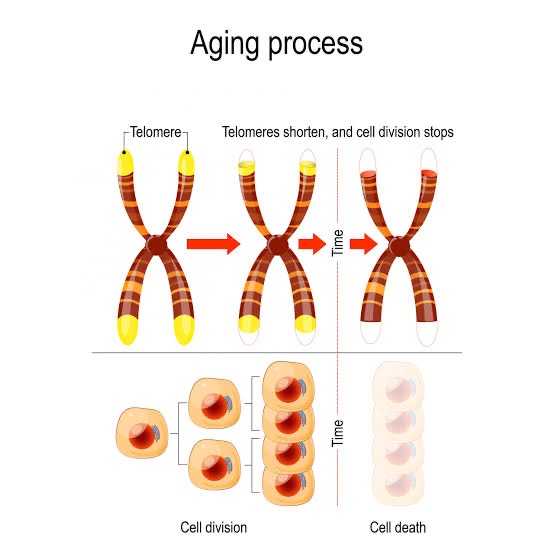
Now when it came to biological age, they began explaining that our chromosome can give an indication of this. Telomeres are specific DNA–protein structures found at both ends of each chromosome and the length of these structures are known to shorten with age. The most impressive and important part of this whole experiment came from the fact that in those who were on the omnivorous diet, there was no change to the telomeres, but for those who were on the vegan diet, the telomeres increased in length. Which meant that those on the vegan diet actually grew biologically younger! Vegan diet is now looking more appealing than ever.
The point, then, for me was, I don’t want to grow older! I want to grow healthier! It doesn’t matter how old I am but how vibrant, energetic and happy I am at whatever age I am! What use would be my 100 year old body if I am sick and frail and bound by a hospital bed? But even if I only live to 80, or just 70, 60 or a mere 50, I will be content with death if I know I lived well and I took care of this body that Mother Nature has given me. It is more important now to me that I will have lived in harmony with her and tried my hardest to not have hurt her in the process of living! And if it means making some changes to how and what I eat, then so be it.
Food for thought, isn’t it? All puns intended. 😉
Signing off
The Girl in Pajamas 👩🏻🦱

 The Girl in Pajamas
Leave a comment